
Welcome everyone! Today, I'm going to share with you some useful tips in order to score C1 on the TOEFL exam.
First things first, I'd like to mention how we should register for our TOEFL test and when we should register. To begin with, I highly recommend that you take the test in a test center for various reasons. You can focus more, enter the exam mindset easily, and you can always get help from the staff instantly if you encounter a problem. I was really struggling to focus when I was preparing for the exam. When I was taking a mock test, I realized that unrelated thoughts were coming into my mind. But during the test, I was able to focus more. When should we register? This really depends on your own schedule. Choose a time when you won't be busy. For example, don't choose your midterm season :)
Most people recommend that you register 2 months before the test because the class could be full, etc. But the key factor is that when you pay the exam fee, the exam becomes more real, since you now have a fixed schedule. You start to study more seriously. But if you don't have a fixed schedule in your mind, you will eventually procrastinate everything.
Okay, now we are all set. Where to begin?
First, go to testready.ets.org and download the free study guide. It literally tells you everything you need to know. In my opinion, you don't need to follow this schedule, but you can take some inspiration from it. Don't stress out if you have less time than 8 weeks, because those tasks can be accomplished in a shorter time period, depending on your own speed.
Next, take the free practice test from the same website. Don't panic! It's normal to have bad scores on your first try. I'll share my first scores and last scores below for your reference.
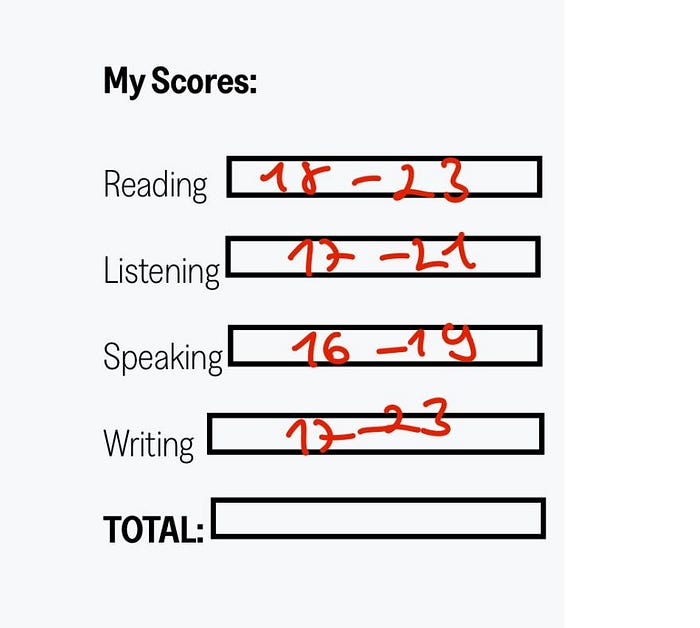
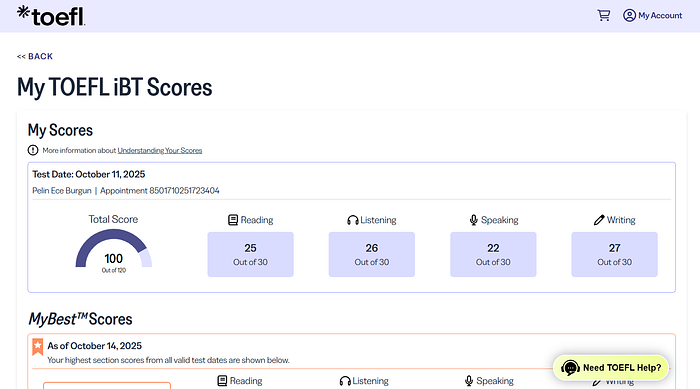
When I first took the mock test, I thought,
"How can I be in my 4th year at university, studying a major that is 100% English with this level of English?"
But that's completely normal when you don't have any idea about the test format and the templates you should know. So, you need to find the balance. If you don't live in an English-speaking country, studying in English doesn't really help without practice. Of course, with proper planning and the right tactics, you could ace this exam with ease.
Which resources should we use? Honestly, I find the ETS resources way too expensive, especially considering the exchange rates in my country. You don't need to pay $60 for just one book. Here are the resources I used with their fees:
-Toefltestready.org daily activities( they give you one free practice activity each day) - Kaplan TOEFL Book that is not up to date (free because my grandma found it in her apartment) - Tstprep.com practice questions(Free)
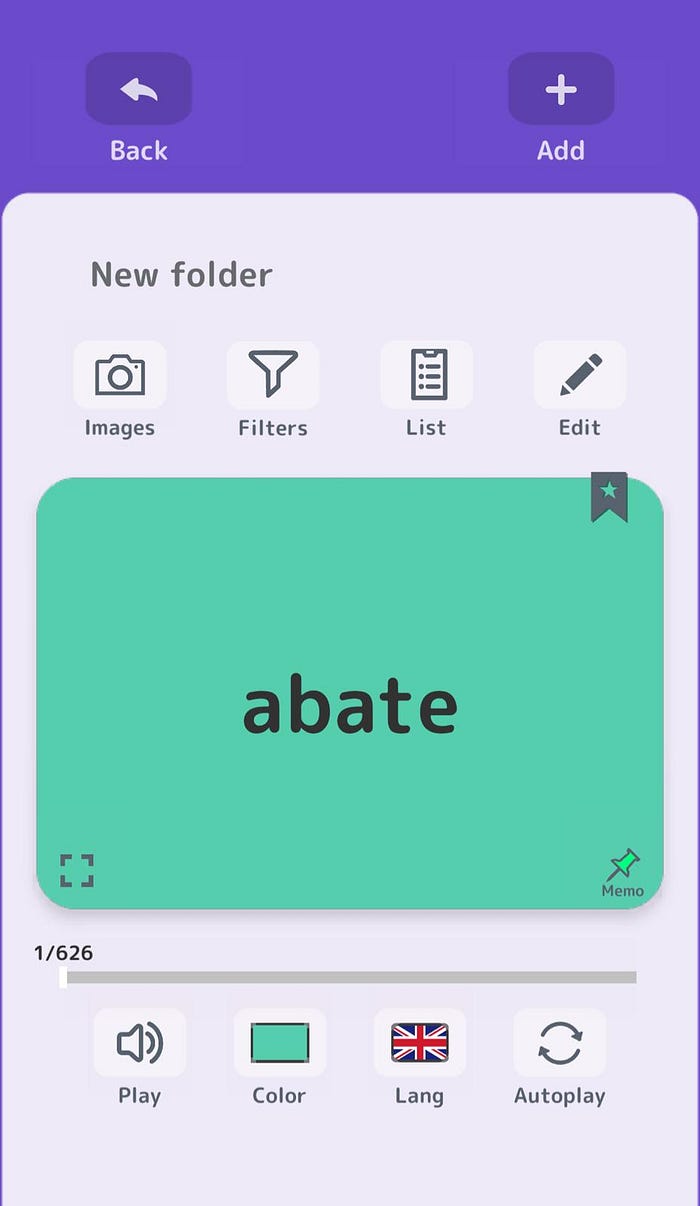
- Flashcards App (Free) to create vocabulary flashcards - Gabble.ai ( bought for 1 month, 20$ ): includes all of the sections, but I don't recommend the listening questions; they don't make sense. Successful for speaking, though. - Weixue Website(Free): The only downside is that you need to sign up to see answers for Listening, Speaking, and Writing. Unfortunately, it didn't accept my country code, so I couldn't register. The best part? Its interface looks almost identical to the real TOEFL exam.
YouTube channels I recommend:
Here's what worked for me, section by section:
Reading:
For many people, Reading is the trickiest part. But in fact, you don't need to be scared because the Reading questions in the real exam are really similar to the practice questions and definitely easier than the Weixue questions.
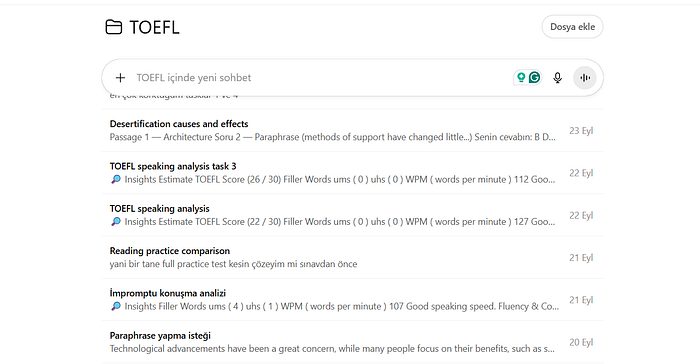
First, you should solve the Reading questions type by type(such as summary, rhetorical function, highlighted sentence, etc.) Then you should find your weakest point and try to improve those question types by checking YouTube tutorials or asking chatGPT about how to fix them. You could also delve deeper by saying, "Here's my answer, here's the right answer. Where am I thinking wrong?"
Of course, there could be various pieces of advice about one question type. From my experience, I found summary questions really challenging; I was getting 2 out of 3 correct, always losing one point. Then I found a trick: Instead of focusing on potential correct answers, I started to focus on eliminating the wrong ones. When I started to apply this trick, I immediately corrected my mistakes, but at some point, this trick also didn't work. Then, I applied my ultimate tactic, which I also used in the real exam: I looked at all the choices, and focused on the "traps", small details that seem correct but actually give wrong information. ETS loves this kind of trap. How do I eliminate them? Of course, I don't memorize the entire passage. I click "View Passage" and then skim the paragraphs carefully. This question type may take time, so after I choose an answer, I go back to the summary questions at the end of the reading section and double-check them. Also, I used to struggle with vocabulary questions when I was doing Weixue tests, because I found them really challenging when I didn't know the word. I had a fear like "What if a word that I don't know appears in the exam and I can't interpret its meaning?" In the real exam, I solved about 5–6 vocabulary questions, and I knew all of them. I think that's not a coincidence, real-exam vocabulary is easier.
How was I able to manage my time? Actually, during practice, I used to struggle to focus, so I was really rushing through things. But the exam environment helps you focus properly. My focus was literally twice as strong in the real exam.
Listening:
Here we have two kinds of questions: Conversations and Lectures. Everyone knows that you need to take notes, but how?
For campus conversations, I always create 2 columns labeled S(for student) and P(for professor) or L(for librarian), etc. Then I write the key information as bullet points. The most important thing in this question type is being aware of the traps, as always:) I don't think that they are challenging in general compared to lecture questions.
For lecture questions, many people argue that you shouldn't write everything. I don't agree with that. I personally write everything because I write very quickly in my everyday life too, so it isn't a problem for me. Additionally, writing helps me maintain my focus, just like in my own university lectures. Of course, this choice depends on your own writing speed.
Listening to podcasts could also be helpful, but I recommend choosing a podcast about a topic that doesn't interest you. This way, you can adapt yourself to unfamiliar topics. For example, I listened to PlanetGeo on Spotify, since geography-related topics were harder to understand for me.
Speaking:
Speaking was the scariest part for me. I had a fear of freezing when a question came up. But I think now I understand the key factors in succeeding in this section.
- Be confident. This is the most crucial advice that I can give you. Regardless of your level, you need to be confident -or at least pretend to be- because confidence really affects your pace, rhythm, and pronunciation.
- Use templates, but don't overuse them. Just use one opening sentence, one concluding sentence(if you have enough time!), and cohesive words(Additionally, As a result, etc. )
- Imitating TEDx speakers simultaneously really helped me with pronunciation and intonation.
Even though I used to score 25 on average before the exam, I scored 22 in the real exam. I'm explaining my mistakes so you don't repeat them:)
I did really well in the 1st task; I spoke confidently, with a good pace and pronunciation. However, in task 2, the arguments of the man in the conversation were insufficient. They were not like the practice questions I had solved, so I panicked and didn't know what to say. Panicking is your enemy!
Since I panicked during task 2, it affected tasks 3 and 4 as well. And I accidentally used the word "great" twice, which ETS doesn't like. So I recommend that you be prepared for every scenario. Try to stay confident, no matter what comes your way.
Writing:
I was stuck at a score of 22 three weeks before the exam. But in the last two weeks, I managed to increase my score to 27. My last practice test score was 27–28 in writing, and I scored 27 on the real exam.
Here are the key pieces of advice: - Just solve practice questions and use templates. That's it. Where to practice? For the Integrated task, you can use the Weixue website. For the Academic Discussion task, https://www.toeflresources.com/toefl-writing-sample-questions-and-answers-discussion-board-questions/ visit this website.
-Don't forget to set a timer. After you finish, paste your answer into ChatGPT and ask it to assess your essay according to the TOEFL rubrics.
-It's okay to make one or two grammatical or punctuation errors. They don't expect you to write flawless essays.
What differentiates scores 27 and 30 is the ability to use complex sentences and highly academic vocabulary. My answers were pretty basic, of course, with two or three "fancy" words in total.
Last Words:
Getting 100+ on the TOEFL is totally achievable. In fact, after I took the test, I believe you can even reach C2 with more strategic tactics or with more time. If you have any questions or want 1-on-1 advice, please feel free to leave a comment or reach out to me on LinkedIn. Moreover, if this article gets a lot of reads, I may consider writing more detailed guides, section by section, or even solving some practice questions:) Wish you the best of luck on your exam! You got this ❤